
 This month marks another milestone in technological achievement as a re-launchable commercial spacecraft, the Starliner, capable of carrying passengers into space successfully completed more than thirty orbits around Earth and returned safely. Remarkable achievements in science and engineering have become so common that we sometimes note them only in passing, yet these advances enhance so many aspects of our everyday lives. From applications and communication on our smartphones to the advances in healthcare that we and our families rely on, technology has opened new frontiers of possibility. At Dental Associates of Walpole, we keep on the forefront of developments in dental care by incorporating technology that provides real world benefits to patients.
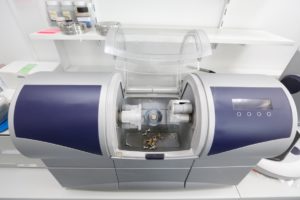 My first introduction to dentistry was over twenty years ago when as a college student, I worked in a dental laboratory that made crowns, bridges and orthodontic appliances. The techniques in use then seem antiquated by today’s standards. I was utilizing the “lost wax” technique employed by ancient Roman artisans, to cast metal substructures. The work I was doing then is now done at DAW through CAD/CAM and Cerec machines that use digital impressions. Not only is the digital technology capable of greater accuracy which ensures the marginal seal of a dental restoration against pathogens, but crowns may be delivered the same day that the tooth is prepared. The color matching technologies for dental restorations that we use at DAW allow our dentists to achieve a match closer to the desired color than is possible with the unaided eye. Even as dental restorations have improved in strength and aesthetics, Cerec technology and digital impressions have made it possible to restore a tooth on the same day—a process that used to take weeks when I was helping in the dental lab.
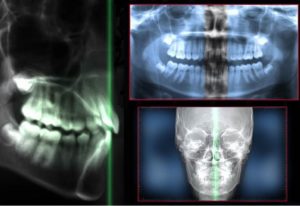 Many areas of dentistry are seeing revolutionary progress. We are now able to use high resolution 3D imaging when planning treatment at DAW through the use of a cone beam CT scanner. The images produced are so detailed that endodontists use them to see inside teeth and map out the complex internal structure of the root canal prior to performing treatment. Like a GPS for the tooth, this allows the endodontist to know where the infection is hiding within the root and along with the use of powerful microscopes allows them to find any subtle passages in the teeth that may be harboring bacteria and causing pain. The current X-ray and CT scan images are higher resolution and produce sharper images more safely at lower exposure due to advances in sensor technology.
In oral surgery, advances have led to the ability to plan using 3D printed stereolithic models of the jaws that allow high fidelity surgery planning and along with intraoral photography, aid in communication with patients about their surgeries. Lasers and piezosurgery allow me to perform minimally invasive biopsies and tissue contouring procedures. Stimulation of new growth of bone around the teeth and within the jaws is now possible with the application of proteins that promote the body’s own cells to regrow bone. When teeth must be extracted or are congenitally missing, titanium alloy dental implants may be used to replace them.
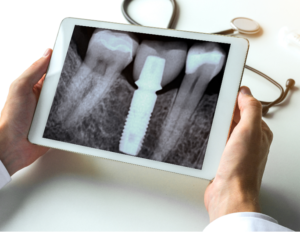 Advances in our understanding of the biocompatibility of titanium has led to a burgeoning field of research in dental implantology. Within the last few years, dynamic 3D implant placement systems and robotic guidance have made implant placement predictable beyond what was previously possible. At DAW, we are able to use cone beam 3D imaging along with 3D printing to create guides that result in precise implant placement. The future of dentistry looks even brighter as we explore technologies that diagnose and treat sleep apnea, provide new computer assisted methods for teeth alignment, teeth whitening and protection of teeth against mechanical wear.
Twelve years ago, the first laboratory grown hamburger was served and was considered a novelty. Looking forward to a future that is within reach, the ability to synthesize tissues in the laboratory will allow for oral restoration using autogenous tissues, the patient’s own. Today, at DAW, we enjoy being at the forefront of technological advances in our field and our doctors meet regularly to explore options for innovative technology and treatments for our patients. We invest in these technologies so that our patients will benefit from advances in dental materials and science. By keeping up with the advances in dental technology, we know that our patients will have smiles we are proud of today and in the future.
By Justin Mull, D.M.D.